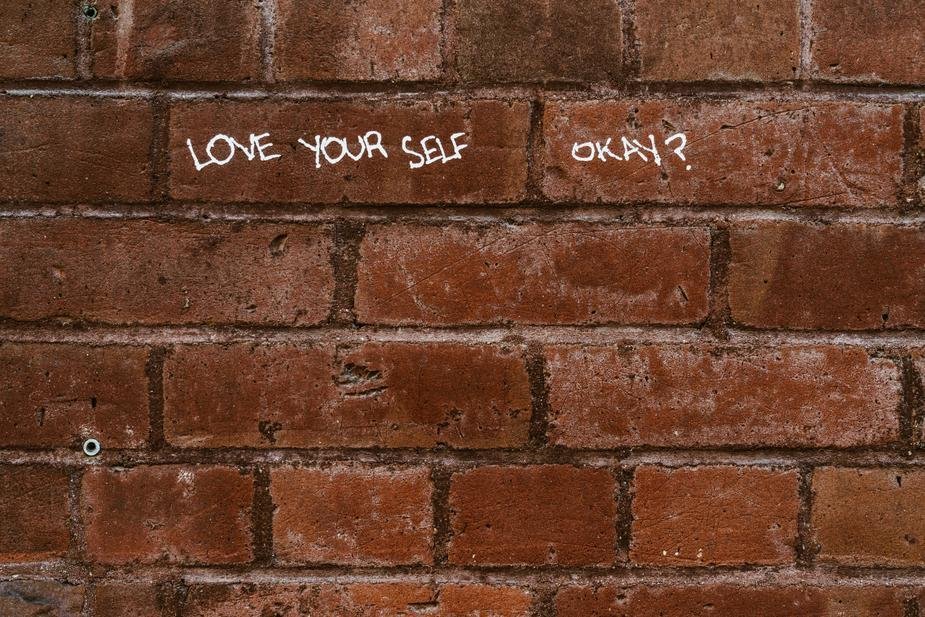
Your Authentic Self

Your Authentic Self

Hello everyone!

Even though we are now in February, Valentine’s Day is next Saturday and thus the theme of Relationship is on a lot of our minds, and in my October post I had mentioned that I would have been soon moving along in my exploration of the I- You relationship, I can’t help but continue along in my exploration of the first essential “piece” in any relationship – the relationship that we have with ourselves.

I can’t help but return to looking at the Authentic Self, what it is, what it means, and how we are called to connect with it. The other day a client told me “Authentic Self, ok, I get it …. or maybe I don’t! What IS the Authentic Self? What does it really MEAN to be AUTHENTIC???”

This got me pondering. I realized that while on the surface the answer can seem pretty straightforward, something like “to Thine Own Self be True” as Shakespeare’s Polonius pronounces in Hamlet when giving advice to his son (he was essentially telling his son to behave while visiting in the big city), if we look deeper we can see that it is not quite so simple.

The reason it is not as simple as “just behaving”, is because we are not such simple creatures. While there are certain general “rules” that apply to all of us, such as the need to eat healthy food, get enough rest, learn to have fulfilling relationships and develop meaningful engagement in life, the details of all these things can vary widely from individual to individual. The variables in what is good for our bodies, minds and souls can be quite profound, despite some commonalities we can have with certain groups of others. What is good for me, might not be good for you, and vice versa.

Add to this all those external factors, the circumstances and the people that have shaped us from our time in the womb forward, and we can see that being “true to thine own self” for most can be actually very challenging.

It often is not something that comes automatically; it requires that we make a decision to begin to discover first of all “who” we really are, and only then begin to also figure out how to express that authentic “self” that is lurking just below the surface, but is afraid to come out and show its true face, for fear of being ridiculed, abandoned, shunned, shamed or perhaps even more violently violated by those around.

For some, paradoxically, expressing oneself authentically might even mean breaking society’s most cherished rules; for others, it might mean accepting years of abuse and imprisonment, to achieve a huge goal that benefits all of humanity – such as with Nelson Mandela.

So, the fact of the matter is that while there are certain characteristics that can help us say – ah, yes, this is me being authentic, and this is how it shows up within me and in my life – it is, perhaps, one of the great paradoxes of human life that we are often deeply challenged to first discover who we are, how we function best, and then make the decision to begin to align ourselves with these inner truths, that can often bring us into direct contrast with what we have been taught to believe, about ourselves, about how life works, and all kinds of things.

Becoming authentic, expressing ourselves authentically, means also connecting with our Personal SELF, the “center of love and wisdom found within each human being”, as defined by A. Mercurio.

Our authentic, or Personal SELF is always nudging us towards deeper love and wholeness, and this can often mean first having to break through our conditioning, which can set off quite intense conflict, within ourselves and with those around us.

All of the religious and spiritual traditions of the world speak eloquently through their mythologies of the epic battles that must be fought so that a deep relationship can be forged between the – the personality, also often known as the Ego  – and the SELF (also called the Soul in some schools of thought), and indeed, when we begin to undertake the difficult task of really listening to its urgings, it can feel quite frightening!

However, those who have chosen to do so, and become willing to go through the discomfort that such change requires, often attest to the new dimensions of awareness and integration, to say nothing of the joy of discovering the deeper purposes of life, that can be achieved.

But, as I said, the process can be complex, and painful; it is not something that most of choose without having to face some inner and outer conflict. Rarely do people undertake a path of self-discovery when everything is going along just fine!

In fact, some of the signs that your authentic SELF is wanting to be acknowledged and integrated into your conscious reality are anxiety (fears and worries that may or may not be “real”, in the sense of connected to actual life circumstances of the moment), depression, certain physical illnesses and symptoms, excessive shame and guilt, conflict with others, excessive isolation, being accident prone, addictions to/compulsive behaviors around food and  substances, money and property, people (love, approval, attention), prestige and the list goes on and on.

One of the less dramatic and painful symptoms, but nonetheless one to pay attention to, is just a nagging feeling that something is not right. Many people complain that even though they have gained all the money, recognition and satisfaction in their relationships they could possibly desire, they still feel that something is missing.

As you can see, in this view, almost all the things we can suffer from are connected to, on some level and to some degree of intensity, a problem with getting in touch with, acknowledging and expressing our “Authentic Self”.

Our Authentic Self, while deeply personal and unique, is also that part of us that connects us to the rest of Life, to the consciousness and the purpose of the Universe in which we live (however you may want to recognize that or call it).

As cells within various “lives” greater than our own little individual lives, we are a part of all life, and the way I imagine it, our Personal SELF is like a little spark that has inherent value, is influenced by the other lives and energies around it and in which it is inserted, and contributes to the wellbeing – or not – of these lives as well.

Whether or not we get in touch with our authentic, Personal SELF actually deeply influences the wellbeing of all levels of life around us.

When we are NOT aligned with our own individual purpose, when, due to our conditioning, we are following others’ plans and dreams for us, or are out of whack due to our traumas or lack of support in developing our ability to acknowledge and express that SELF, there is no way we can be at peace within ourselves and with others, or offer our unique contribution to the world in a way that is satisfying for us.

The SELF as a center of wisdom and love within us wants us to always be growing, becoming more deeply integrated, and connecting with others in creative, loving, life-giving ways.

The SELF does not expect perfection, nor does it consider anyone better or worse than anyone else. The SELF is relentless, however, in its goal for us – all of us, with no exception – to become ever more capable of loving ourselves and others, and of contributing to Life on many different planes with the authenticity of our own, personal expression, which is something that only we can bring into the world. 

It seems to be kind of a paradox when you think of it, because if we are each just one tiny cell within the gigantic “body” of the Universe (or even just of the earth, or of our community or family), how could our own personal realization possibly have any meaning, or affect anyone or anything else, outside of our immediate sphere of influence?

Well, if you look at the human body, we can see how great an effect even one cell that is “off” can have on the entire organism. With cancer cells, for example, we can clearly see the devastating effects that one cell that is “off” can produce, by creating a sort of domino effect all throughout the body.

The same can be true of each one of us. We can either affect positively or negatively not only our own lives, but also the lives of those around us, and whereas I am not writing this to frighten or blame anyone, it is important that we become aware of just how important our own integration truly is, not only for ourselves, but to others, and to all of Life.

What is important that we become willing to acknowledge and accept, is that most of us have to make a conscious choice and an effort to first become aware of our Personal SELF, and then to learn to follow its urgings and nudgings, that are continuously being communicated to us, often through our bodies and minds, and experienced by us as some form of pain or discomfort.

Whereas we sometimes seem to believe that our “purpose” has to do with some hugely important accomplishment in the outside world, such as an important job or creative project, or having a particular kind of relationship or family, in reality the purpose of our SELF is something that is continually unfolding, day by day.

We are challenged in all kinds of situations to transform our emotions and energies; to shift out of automatic reactions that can do ourselves and others harm; to create new life, new levels of awareness and engagement within ourselves and with others, etc., etc.. And sometimes, the transformations we are called to carry out are quite the opposite of what we might think.

To be a bit more clear about this, let me use one example that has been very important for me to understand personally, and that I find many of my clients struggle with as well (both men and women, although for women it can often be especially tricky – but we’ll leave this discussion for another time): how to deal with the complex emotion of anger.

Most women have been deeply conditioned to not express anger of any kind, so, when their partner, children or anyone else does something that makes them angry, their first instinct is to repress this feeling. Now, while it is certainly better to repress anger than to lash out in a violent expression of it, the kind of repression that women often activate within themselves can be equally as dangerous, even though not as visible.

The inability to first acknowledge emotions such as anger, and then express them clearly and honestly in constructive ways to others – which means communicating our boundaries and limits, and therefore claiming our own “space” while asking others to respect that space – can often implode into not only depression, as is today commonly known, but can also become a literal wall that we build between ourselves and others.

Rather than allowing anger – which is often a signal that our boundaries have been infringed upon – to help us set things straight with those around us, it can wind up becoming a prison, for both ourselves and our relationships.

In this case, the repression of anger, which no doubt has helped us reign in our baser reactions and therefore has been an important aspect of our evolution and therefore of our Personal SELF’s goal for our individual and collective lives, can end up being an inhibition to the expression of that same SELF.

This does not mean that all control of anger must be thrown out the window and that we should just let it out and destroy ourselves and others, but it does mean that getting in touch with our authentic, Personal SELF involves also learning to become more flexible in how we are applying the rules and regulations of human relationships, so we can recognize what our real needs are, and begin to respond to them in healthy ways.

If we are to be authentic, we must learn how to express even the more difficult parts of ourselves, our shadows, our negative traits and our difficult emotions, not to be destructive, but to be real. 

When we can give ourselves permission to be real, to acknowledge that we are not perfect, and that we like everyone else, suffer from all the human shortcomings in some measure, we can actually learn to harness the energy contained in them, to use it for useful purposes.

Anger, for example, is what signals to us that there are boundary issues with others, and it can help us find the energy to confront someone who is not treating us with respect; it can give us the impetus to speak up in our own or another’s defense; it can help shake us out of our lethargy and find the help we are needing to turn our lives around. So, rather than repress and deny it, we must learn to harness it, and use it in constructive ways (and A. Mercurio also has an interesting term for this,  “the love force”, which is a combination of love and hatred, used for constructive purposes).

If we look at it in this manner, we can see how precious even a difficult emotion like anger can be, and we can learn how to use its energy to improve our lives. I know that as I personally have learned to utilize anger in a constructive way, all my relationships have improved, in the sense that I now feel truly authentic and whole when I interact with others. I can work through resentments much quicker, and let things go …. and I am also much better at being able to distinguish who is truly good for me in my life, and who it is better to keep my distance from, because there is just no possibility for a mutually enriching , truly authentic, exchange.

I also see how learning new strategies and tools to transform anger into a positive energy transforms my clients, which is even more thrilling. There is nothing more heartening than to see someone who has felt like a beaten-down wallflower step into a greater love and acceptance of him or herself, and begin to shine!

If you are feeling nudges from your own Authentic Self, or are wanting to learn how to express yourself in ways that feel freeing and empowering, open up to considering getting help in doing so. Often it is in the act of connecting to others who are just a bit further along the path that we can find the new information and support that we are needing to connect to our Authentic Selves and begin feeling the love and seeing the beauty that is already here for us to embrace.

Click here to get an idea of what kinds of services I offer and don’t hesitate to contact me today. As someone who has been walking this path for a while now, I know how important this journey is, not just for each one of us, but for all of humanity, and it is an honor to be able to help others and be of service to life by sharing a bit of what I have learned – and continue to learn from and with my clients – along the way.

My best to all and ….. till next time! Maybe in my next post I will finally get to the whole relationship-with-other-thing…. and maybe my new website will be finished, too! Miracles happen every day ….. 🙂

Much love,

Martha 

Amo Ergo Sum

  happy holidays from the center for the development of the person  

“If we did not have our wounds to heal and we only had the Beauty of Life, we would become static and immobile in the ephemeral enjoyment of Beauty” – Antonio Mercurio

Here we are, in the holiday season, and at the end of yet another year with the beginning of a new one just around the corner!

I have been thinking a lot, recently, about love, and hate.

Of course, with the things that are happening around the world, the violence and the hunger and the warming earth, it can be easy to get caught up in thinking that we are never going to get this right, and that we are doomed to destroy ourselves, each other, and this beautiful and delicate globe we call our home.

But then ….. I manage to step back a moment, and remember where I have come from, and look at the progress that others I know are making as well, and I can see that there is much more to all of this than meets the eye.

There is nothing more challenging, and yet more moving and wonderful, than delving into our very lives, with all our wounds, and pain, and loss, and deciding to transform all of that darkness into love, beauty and new creativity.

Every time we manage to shift our focus from resentment to forgiveness (which does not, necessarily, mean reconciliation – the transformation must happen on both sides for that to happen, when too much pain has been caused – but we can forgive, and let go of the pain, hatred and self-justifiable anger); from the need to retaliate or obtain justice to a desire to activate our ability to create beauty in even the most difficult of situations, we are releasing precious energy into our own lives, into the lives of others, and into the Whole of which we are each a single cell.

The more of us that choose to truly experience this, and activate this type of existential Art within their own beings and their own lives, the more we can contribute to the transformative process that Life has entrusted to us as a species.

This is, in essence, what is captured in the affirmation “Amo, ergo sum” – I love, therefore I am: as Antonio Mercurio has so eloquently pointed out, the ability to create love and beauty is both a great gift, and a great task assigned to us. While we must use our ability to think (“Cogito ergo sum”), to use our higher mind, as Descartes declaimed centuries ago, ushering in a new (and most certainly necessary) era of rationality, the time now has come to activate our hearts, in concert with our minds.

Only our hearts can bring us to the kind of deep integration that can heal our own wounds and further the healing process in the entire species.

It is my sincere hope that we can all open our hearts – and our minds – this season, and realize that we are not each others’ enemies, no matter where we are from, what religion we profess, which political party we adhere to, or how much money or education we have, or don’t have: we are each one of us human beings, here to learn to love our own lives and see them for the gift that they are, and work together to create ever new levels of love and beauty.

My best to all, and may each one of us come to know how truly loved and precious we truly are, because when we discover that, and truly understand it, we discover the same thing is true of every other Life

That is when Peace on Earth becomes possible, as it begins within each one of us.

Martha's Signature

764px-La_Vierge,_l'Enfant_Jésus_et_sainte_Anne,_by_Leonardo_da_Vinci,_from_C2RMF_retouched Leonardo da Vinci, The Virgin and Child with St. Anne

As Antonio Mercurio pointed out to me a few years ago, this painting shows beautifully what a gaze of love is, from mother to daughter to son/grandson (even above and beyond the purely Christian connotation).

I look at it often (I have a print of it in my office), and I show it to my clients, to remember to gaze upon ourselves with that kind of love. When we can love ourselves freely and responsibly (free from our conditioning and from commitments made from obligation), we can love others with truth and authenticity, and also open ourselves to receive love in a healthy, balanced way.

 
Pain as a Cosmic Force ….. to Create New Love, Beauty, Truth and Freedom!

Pain as a Cosmic Force ….. to Create New Love, Beauty, Truth and Freedom!

This has been an incredible summer for me, to put it mildly. Full of loss and cleansing and shifting …. and now, all kinds of wonderful, new things are emerging.

How are you? I hope you are doing well, and if you are one of the people who had a real time of it this summer, know that you are not alone …. and also, keep in mind that PAIN SERVES TO CREATE ….

I certainly had my share of pain, this summer. Of every type: emotional and spiritual/ existential during the time my mother was dying in June, and when she passed in my presence on July 3rd; physical emotional and existential pain when a strange birth defect that I knew nothing about emerged soon after my mother’s passing, requiring emergency surgery and the removal of a huge piece of my intestine; and more of a bit of everything, when I was challenged to undergo a major dental procedure, just a few weeks after my major abdominal surgery.

 Even writing this out makes my hair stand on end! I can hardly believe that I have gone through all that – and all kinds of other trials regarding family of origin relationships and such – and am emerging not only intact, but more centered and joyful and grateful than ever before.

While I was going through all this I knew in my heart that I was being led through some important cleansing and shifting (I won’t go into the symbolism of all these “deaths” right now – my plan is to write about this over the next few weeks); but what kept me most in good stead was the question: “And what am I being called to create, from so much pain?!?!”.

  This attitude, this way of looking at PAIN as a cosmic force that pushes us not only to be cleansed of our toxins and poisons – physical, psychological-emotional and spiritual – but to make new decisions to create love and beauty to the best of our ability, together with others one day at a time, has truly revolutionized my life over the last couple decades. I certainly saw how deeply it has shaped how I live today during the immense pain I experienced on every level over the last few months.

 I am grateful every day to Antonio Mercurio for having introduced this new way of thinking, which is slightly different from thinking of pain as “just” being necessary for growth – because thinking of actually creating something from a painful experience is quite different from the idea of simply “growing”

Even though our growth is good and important, creating something new means going a step further, and sharing that growth with Life and with others in a deliberate way. This opens up a whole new realm of possibilities, and also of creative responsibility, which are amazingly transforming in themselves. Never before have I been so intensely aware of these subtle, but fundamental differences in this approach, and so grateful to all those forces that brought me to bump into this school of thought all those years ago, and decide to train and specialize in it so I could share it with others.

Never before have I been challenged like I was challenged this summer to hang on to the tiller of my deepest values, and navigate the storm to the best of my abilities, without giving in to the fear and  pain that was often shadowing my heart.

I am not saying that I have not had some really bad days, or still don’t have them, sometimes, as I am still dealing with some pain and limitations and conflicts. But when I remember that I am an Artist of my life, not a Victim, and I am learning every day new ways of loving and caring for myself and others and of receiving love, and am being called to practice this Fine Art of Living and Loving, even the bad days have a different feel to them.

When I tune in to the trust that all of this has a deep purpose for me, and is propelling me towards a new chapter in my life where I am now cleansed and liberated on many different levels, and therefore freer to create new Love and Beauty in my life and in the lives of others in an even more effective way, even the darkest fears and shadows cannot grip my soul or my psyche for too long.

And as the days have gone by, some of the New has begun to unfold around me, which is, of course, an expression of the New within me.

The most important is that I will be leaving for Italy on September 6th, and will be there for an entire month! I already had on my schedule the class I am teaching at the end of September for ISACA, the Institute in Puglia for which I am a Docent (and which I am twinned with, so as to share our strength and wisdom as we develop ourselves as Persons and Artists of our lives, and our training centers in Counseling in Existential Personalistic Anthropology and Cosmoartistic Anthropology); I teach at least one course per year for them, but usually do so at a distance, with videos and written materials and a Skype encounter with the classroom. 

pain as a cosmic force
The Greek-Roman Amphitheater in Lecce, Italy – I have not seen this yet, and definitely plan to go!


I had played around with the idea of actually trying to go, to be able to teach the class “live” in September, but was not sure I was going to be able to swing it, as I wanted to get my own training program up and running, and a trip outside the country just seemed like trying to pack in too much for me at once.

Instead, while recovering from my surgery, I realized that what I really needed was to go back to my “other home”, Southern Italy, where I lived for 24 years, and where I began my life as a counselor in Existential Personalistic Anthropology/ Cosmoartistic Anthropology. I have not been back since I moved back to my “first home” here in Wisconsin in 2006 …. and during those days of deep reflection (nothing like almost losing your life to make you get in touch with what is really important!) I knew the time had come for me to go back.

As I began to put together the plans for my trip, I received another invitation to teach my class; this time at the IPAE in Cosenza, which is where I did all my education and training and began my personal path of self-discovery and development, 25 years ago! I was absolutely thrilled, and of course accepted the invitation with immense gratitude and joy.

Pain as a cosmic force

The statue of Bernardino Telesio in Cosenza, with the Norman-Swabian castle in the background. 

This is all bringing me deeply in touch with another aspect of the concept of Pain as a Cosmic Force that Serves to Create, and that is that this type of creation is something that is possible only through interaction with others.

In Cosmoartistic Anthropology, Choral Energy is the energy created when two or more people decide to evolve and create together, following the Organismic Principle, which helps us see how deeply interconnected we all are, and how important it is for us each to become Persons capable of loving and expressing ourselves as unique individuals, so we can contribute that uniqueness to the purposes of a larger creation, possible only when two or more come together.

When two or more people choose to participate in the creation of Choral Energy following the Organismic Principle – and this can happen in couples, friendships, families, business and educational and creative groups of all kinds – real Magic can happen! Many of us already experience this on some levels, in our personal or work lives, even though we may not use this language to describe it, or have a real awareness that that is what we are doin

I personally believe that all of us, as human beings, have this deep desire within us – to become Individuals, capable of developing our own Truth, Love, Beauty and Freedom so that we can then contribute it to the development of the whole we are all a part of – but we are not necessarily aware of it. Often times our greatest suffering, alienation and violence towards ourselves and others arise from our feeling cut off and disconnected, from our deepest Selves and from others, but it is exactly this existential pain that can become the motor we need to search out new ways of thinking, acting and living, that can lead us forward to more deeply satisfying lives.

 I know that this was the case for me – it was my feeling of being completely alone and cut off and surrounded by role models that simply did not convince me, either in my personal sphere or in the educational/professional sphere, that drove me to search and search, until I found a “home” where I could finally develop the values that were whispering to me ….  all the way over in Southern Italy, of all places (and I have been asked many times to write of how I got there …. it could be that when I go back now, I will finally have the time and the right state of mind and spirit to do so …).

 And here I am now, more than 30 years later, and going back to the land of my spiritual roots and first blossoms …. after having been completely focused on sorting out other aspects of my life, here in the land I was born and raised in, for the last 10 years.

 I can sense that this is possible thanks to the kind of Choral Energies I today am a part of – my family comprising of my fiancé Jim and our wonderful children Sara, Francesco, Courtney and Alec; the projects I am a part of with my colleagues and collaborators in Italy, first and foremost Antonio and Paola Mercurio and the Sophia University of Rome and all the Centers and Institutes affiliated with it; Bruno Bonvecchi and Ombretta Ciapini of the IPAE in Cosenza, my first Teachers, as well as all of their Staff and students; Daniele Gabriele and Anna De Nitto of ISACA in Puglia, along with all their  Counselors and students; and last but not least, all my wonderful clients, supporters, colleagues and friends here in the US , who have so enriched my life and have enriched me in more ways than I could even begin to describe.

All of this exquisite Choral Energy is now carrying me forward into new levels of creativity and expression, while also asking me to become ever more clear about how to take good care of myself

 Choral Energy requires the presence and participation of Persons – those capable of loving themselves, loving others and receiving love; and while it has its own characteristics that make it unique, it is not a type of group that wants its members to conform to a specific mold, as so many human groups tend to do.

Synthesizing opposites of this type – love and freedom, service and self-care, autonomy and interdependence, etc. etc. etc. – requires a profound decision and willingness to try, and try again and again, as Artists, who painstakingly work at their individual and choral masterpieces, day after day, correcting their mistakes as best as possible, so they can bring forth the greatest beauty they are capable of creating.

But while this does require some sacrifice for the individual – because when we work consciously together in groups, we are called to let go of many things, and cleanse ourselves of some of those poisons which most keep us from our common goal (such as our self-righteous pride, our envy and comparison with others, our greedy wanting more than our share of attention or resources, to just mention a few …. all things that we allare subject to, whether we are aware of it or not, and must be willing to look at, if we are to truly become capable of creating together) – it also means that as individuals we can access levels of sustaining and supportive energy that we simply cannot produce by ourselves.

As I was pondering whether it was wise for me to hop on a plane only a few weeks after having had major surgery, I realized (after getting the O.K. from the surgeon) that while on one level the invitations I had received to teach were opportunities to share with others some of the knowledge and wisdom I have gained over the years, they are also wonderful possibilities to connect with members of my “spiritual family”, and be nurtured by them, and reinforce our bonds while we have the opportunity to discuss and develop in person our mutual creative projects and goals.

Also, as I am planning on offering a full training program here in Existential Personalistic Anthropology and Cosmoartistic Anthropology, it will be really wonderful for me to reinforce my connections with those who already have fully functioning Centers and Institutes. From them I can receive guidance, ideas, and support, to finish putting together the Curriculum I will be offering, while also setting the stage for future collaborations.

This, indeed, is how Choral Energy works – we contribute to it, and we receive from it, just as the organs in the human body all give and receive to and from each other, to collaborate in the great work of art that is human life.

 It is in this spirit that I am packing my bags and readying myself to go back to my “other home” after so long: with great joy, with a new and deeper sense of humility – because as I said before there is nothing like death, both when we lose someone dear to us and we are faced with it ourselves, to bring home to us what is truly important – and also with the clear intention to fill my tanks, so I can share all of the wonderful things I will be experiencing and receiving with others when I come back.

Expectations: how they shape us, and how we can transform them

Good morning, friends.

Today I want to share something I heard about a few weeks ago while in the car. I was listening to NPR’s This American Life and I heard a segment (click here to read the transcript of the show) about studies done on how expectations, how what we think of ourselves and others, can deeply affect and shape our lives.

In a nutshell, a research psychologist named Robert Rosenthal  put labels on the cages of laboratory rats, to see what kind of effect they might have on the rats’ performance. On some cages he put signs that said “this is a very intelligent rat”, and on others he put signs that read “this rat is incredibly dumb” and things like that.

What he discovered was that the rats that were “labeled” smart did two times better in the laboratory performance tests than the ones that had been labeled “dumb”. Remember that there was no “real” difference between the rats. After just one week, the difference in performance was undeniable between the supposedly intelligent rats and the “dumb” ones.

What do you think? Is this little rat very intelligent, or very dumb? Or maybe he’s just average?! I think he looks quite smart, don’t you?!

Rosenthal went on to study this phenomenon in many different contexts, and his results became known as the “Pygmalion Effect”, taken from the title of the famous Bernard Shaw play that then became the hit play and movie, “My Fair Lady” (where a refined nobleman takes a lower class woman under his wing, and transforms her into a “lady” – if you haven’t seen Rex Harrison and Audrey Hepburn in the 1964 movie version, it’s a must-see in my book, with wonderful music as well!).

Rosenthal’s studies have been applied over the years to largely educational and sports contexts; they help teachers and coaches learn how to maintain positive attitudes and expectations towards their students and athletes, so they are encouraged to bring out their best.

As you can imagine, the ramifications of this effect are wide ranging. It perhaps has the most conditioning power, in both a positive and a negative sense, within the family, and most especially in the mother-child relationship (or the relationship between the child and the primary caregiver, although there is no doubt that the mother’s expectations towards her child are hugely conditioning during the intrauterine period as well).

How Expectations and Emotional Atmospheres Shape Our Experience of Life

What this all underlines is how important beliefs, attitudes, emotional and relational “atmospheres” and expectations truly are. This particular research and the insights it has brought about since it was first done in the 1960s can help us see how our early interactions with others formed the basis of our lives, of how we perceive and feel about ourselves, about others, and about life itself. (Today it is also seeing somewhat of a renaissance, thanks to how the awareness it offers can be a powerful tool in transforming racism and its nefarious effects on individuals and society as a whole).

Whether or not we are aware of it (and some assert that well over 90% of what truly is conditioning our responses and choices in life is determined by unconscious beliefs and “expectations”), we are deeply affected by what we think and feel about ourselves and what others think and feel about us; others are, in turn, also affected by our thoughts and “expectations” of them.

What Rosenthal understood in his studies is that when we have a certain kind of expectation towards another, we unconsciously act in certain ways, and communicate what our “judgments” are with non-verbal clues. He saw that the people caring for the rats did certain things (more gentle handling and voices) when they had positive expectations (believing the rat was intelligent), and other things (less handling time, less interaction in general), when the expectations were negative (believing the rat was dumb).

The NPR show goes on to tell about a young man who is blind, but who hikes alone in the woods, travels in foreign countries, and even rides a bike. (Again, here is the transcript and you really should go and read this, it is life transforming).

Why? His mother wanted him to have a “normal” life, and believed he could have one, despite having had his eyes removed as a baby, due to cancer. And not only did she want and believe this, but she encouraged him to believe it, too, not only by encouraging him verbally, but by giving him the freedom to figure out how to navigate the world on his own, so he could develop his own little “systems” that would allow him to know where he is and move through space safely (he clicks with his tongue and does other things, using sound to help him orient himself).

This combination of encouragement and freedom gave him the confidence and independence he needed to figure out his own way of interacting in the world, using his own innate abilities – something we all have to learn to do, to become healthy adults capable of enjoying our lives and of interacting with others in satisfying, productive and loving ways.

I am sure you have heard of other “miracle” stories like this – not least of which the incredible one of Helen Keller, a girl who became completely deaf and blind after an illness in childhood, whose teacher Anne Sullivan (whom her parents, and especially her mother, found for her) helped her find and develop a “voice” that would become an inspiration for generations of people all over the world. She was the first deaf and blind person to earn a Bachelor’s Degree, among other things, and her depth of intelligence along with her warm heart have left deep impressions on millions of people for over one hundred years now.

But while these wonderful stories of the amazing results positive expectations can have are truly inspirational and can help us be even more determined to think and act positively towards ourselves and others, they can help us become more aware of the devastating effects negative expectations can have, as well. Also, when someone is faced with evident physical disabilities, the obstacles they face and the effects of the positive, loving expectations of their families and mentors can be more obvious and measurable: as in the cases mentioned, these people managed to overcome barriers that are quite objective and recognizable.

You Think, Therefore I Am

It can be a little bit trickier when the effects have more to do with inner states such as self-esteem, emotional groundedness and connection, the cultivation of a talent (or not), or just a general ability to flourish in life and have fulfilling relationships. It can be harder to find where the seeds of negative expectations were planted and by whom, and how to dig them up so new, more beautiful and life-affirming ones can take their place.

Mothers and fathers and caregivers in general are simply people, as we all know, with their own stories, their own pain and insecurities and good and bad traits. Just because they have been granted the gift of parenthood does not necessarily mean that they are capable of loving either themselves or their children as unique individuals , which sometimes also means embracing huge differences in aspirations and temperament, and therefore of holding in their thoughts and their hearts positive expectations of them.

The thing about positive expectations towards those around us, and especially, perhaps, our children, is that if we have not learned to have them towards ourselves we simply cannot pass on what we haven’t got. We can pass on expectations to excel or to “become” something, in an external application of the kinds of competitive values so highly prized in society, but we cannot pass on the deep, authentic appreciation and support needed to help others Be, rather than simply perform according to external standards of achievement.

There is certainly nothing wrong with achievement in society – if it is in tune with who the person is. It is wonderful to see athletes compete at the highest levels, scientists pursue their research with passion and purpose and win the Nobel prize, administrators guide corporations with attention and pulse and earn big bucks, and painters paint their canvases with focus and creativity: each expression is “sacred” and a true work of “art” in its own way.

Each part, each cell, each expression is absolutely necessary and good in the organism that is the human family as a whole. The problems arise when we are not allowed or encouraged to express who we truly are, and so end up following a track that seems like the right thing to do because it brings us money and prestige and it pleases others, sometimes to the point of often not even knowing what we like to do, where we like to be, and with whom.

Why Being Real Matters

We can give a whole lot of lip service to being loving and supportive of our children and other loved ones, and of our students and employees and co-workers, but if we are not feeling good about ourselves and our lives, if we are living a lie, this is going to be a much stronger message, especially to our children, who can easily see behind the mask.

It will also add the heaviness of hypocrisy, which can truly weigh down and suffocate our deepest selves, because how can we transmit a love of life and an experience of the beauty of life, or primary beauty as A. Mercurio calls it, if we are not cultivating it ourselves? We can try to pretend that everything is ok, even for decades, but those around us know in their hearts that something is not right, and especially our children and those who are closest to us, because they “see us with the eyes of their hearts”, as I often tell my clients, and the heart is capable only of truth.  

What this basically means is that if we have not learned to love ourselves for who we truly are, warts and all, or if we haven’t even yet embraced who we really are and what we really want to do because we are still living according to the expectations of others, we simply cannot encourage others and offer the kind of support and “positive expectations” that could help them flourish and create a flow of circular love and appreciation in their own lives.

I also believe that it is important to not just look at positive and negative expectations in a general way, such as in regards to intelligence, or talent, or what we are going to do for work.

It is important to become aware of how we can impose our own values, dreams and wishes on others, that might not at all be appropriate for who they are. This type of imposition not only negates the person in their authentic individuality, but it creates a “negative expectation” that can be extremely damaging.

I would dare to affirm that while positive expectations are of course generally good, in the sense that if we look at another and have a good feeling about them and “expect” them to be successful in life because we love them, if, instead, they are “positive expectations” regarding qualities or abilities that the other simply does not have, they can be disastrous.

When Expectations Run Deep

Another form of “negative expectation” can be connected to something even deeper; to hopes and dreams we have for ourselves, that we are wishing that others will fulfill for us. A particularly difficult example of this can be seen a parent is hoping a child will be of a certain sex, and comes out as the opposite (something way more common than most parents would like to admit).

Although we would never say it out loud, we can end up communicating our disappointment to the child with subtle, nonverbal clues all throughout the his or her life, creating doubt and insecurity with regards to their essential identity (not necessarily sexual identity in the sense of how the child will express their sexuality; the effects can actually go much deeper, creating doubt in terms of the validity of their existence, way before any kind of sexuality emerges).  

The results of these deep kinds of thoughts and feelings, that sometimes are simply connected to personal desires and preferences (that each person has every “right” to have, in the sense that any mother has every right to “desire” to have a child of a certain sex), and that often hover just below the surface of our consciousness and can deeply influence other people, can be equally as disastrous as having negative expectations based on disabilities or differences. Another particularly tricky situation can arise when there are personality clashes and other situations where the child is simply not the person the parent was hoping to have as a child.

The same is true of all our relationships, including the one with ourselves. If you take an honest look at yourself, are there things about yourself that you simply don’t like? That of course can be perfectly normal – we wish we had brown hair instead of blond, were better at languages or math, or weren’t quite so challenged with directions. The problems arise when we see ourselves as lacking, when perhaps we simply have not had the opportunity to learn a new skill, or as flawed because of our difficulties, when instead we may be carrying wounds that need healing.

I would venture to suppose that parents who have a hard time having “positive expectations” towards their children that are an expression of an authentic recognition of the child’s personality and personal talents and gifts, are people who themselves grew up in an atmosphere where they were not recognized as individuals. The “expectations” they grew up with were either negative, or were geared towards trying to get them to become something that was “acceptable” to the parents, the family, society etc., regardless of whether or not it was something they truly were as people.

Therefore, these kinds of deeply conditioning “expectations” can be passed on through the generations, and they can be extremely difficult to first recognize within ourselves, and then to break out of. Indeed, these non-verbal, often unconscious expectations are the things that are most conditioning our lives all throughout adulthood, and can cause real havoc until we begin to understand what is going on, and begin to change the patterns of thinking and acting that keep us locked into ways of seeing and being that are not at all life-affirming for us.

When “Success” is a Mask for Failure …..

Paradoxically, often times those whom we see as being the most “successful” are also stuck in patterns of expectations, that may seem positive because they bring accolades and financial comfort, but in reality are huge burdens for the individual in question, because they are not in tune with the deeper purposes of their Personal Self.

When you see someone make a right-about-face at some time in their life, abandoning their previous track for something that looks quite opposite, you can rest assured that they have discovered that the expectations they thought were life affirming were in reality life-draining, and have found the strength and courage to make the changes that have been simmering under the surface for years.

But, let’s go back to looking to the problems that can arise when we have been conditioned by more negative forms of expectations towards us, since they can hinder our ability to live well and to enjoy life.

I can’t say it loud enough: if you often have negative thoughts about yourself, if you tend to struggle with low self-esteem, anxiety, depression and addictions, you quite likely have internalized some powerfully negative “expectations” of yourself.

Or, maybe you are not aware of any truly negative self-talk, but certain kinds of situations that cause you pain tend to repeatedly appear in your life – accidents, illness, problems with work and money –  and you just can’t seem to understand why.

If these things sound familiar, it is highly likely that you have a deep pattern of expectations, that are creating specific results and effects in your life, even though you may have no clue that the “source” of these problems may be inside yourself, or even coming from the people around you.

Maybe they are things that you don’t think consciously, and have never been said out loud, but if you are struggling with your life and feel trapped by negative patterns, you can be sure that lurking somewhere is a deeply negative judgment of your person and your life.

Whether it is coming from you, or from those around you (and it is usually a combination of the two), the first step is to become aware of of what you are thinking and feeling, so you can see where your own power lies to be able to change it. Awareness is the first step, and from there you can choose to get the kind of help and support you need, so you can break out of it and create a new script for yourself, that honors who you are exactly for who you are and for the simple fact that you are alive.

Essentially, this is at the very basis of learning to love ourselves and care for ourselves in ways that are affirming of our individuality, of those special attributes and gifts that only we can add to the world. If we don’t become capable of first seeing ourselves for who we are, and deeply embracing our particular “self-ness”, our own special way of seeing Life and of interacting with it and enriching it with our transformational abilities and our ability to love, we cannot truly step into the life we are meant to be living.

Now, this all might sound very tragic and discouraging if you are currently feeling far from being able to realize your dreams, and there is no question that living in these kinds of existential prisons is excruciating (I know, I was there for a long time).

But there is no need to despair: when we do begin becoming aware of how we are stuck in our conditioning, whether it be due to an internalized script or to the negative influence of those around us who cannot see us and support us for who we are, rather than how they would like us to be, we can not only turn our own lives around, but we can become a positive, loving force for others.

Owning our Power: We Can Change Our Thoughts, Attitudes and Expectations About Ourselves and Others… but Not Alone

If you want some proof about this, about how powerful changing our thoughts and attitudes can really be, I want to invite you to try a little experiment.

Before I describe the exercise to you, however, I want to make a very strong statement, that I am firmly convinced about:

We cannot change our deepest expectations and convictions about ourselves without the help of other people. We need to be able to connect with the positive expectations of those who can see us in our wholeness and who can help us see our positive aspects and take action to nurture them. I am personally convinced that this is one of the reasons we are all here – to help each other grow into ever greater expressions of creativity, love, and beauty.

Therefore, if you are trying to change your life all by yourself, or think you “should” be able to “get it”, or that no one can help you …… try to open your heart and your mind to other possibilities. A new path, a new freedom, and a new wholeness are waiting just around the bend, but they require a decision from you to let go of trying to do it alone.

Ok, now that I’ve gotten that off my chest, let’s get on to the tool .

Since it is often very hard to see changes in ourselves when they happen, but is instead relatively easy to see them when we are looking at others, I want you to try this experiment with someone in your life who is particularly difficult and troublesome for you, or who perhaps causes you a lot of worry because of the choices they are making in their lives. (This little exercise is particularly powerful with those who are closest to us, like our partners and our children, as we interact with them daily and therefore we affect each other immensely, in mostly unconscious ways).

First of all, I want to ask you to make a little commitment with yourself to suspend all judgment regarding this person for the next week. I want you to say to yourself: I will do my very best to not continue thinking about this person as I normally do, and just do this exercise, for one week.

Then, I want you to take out a little notebook, and put the person’s name up on the top of the first page (you may have more than one person with whom you have a difficult relationship with, but just start with one, so you don’t get overwhelmed and quit half way through. You can always then go and apply this experiment to others, once you have done it for at least one week, and have begun to see some results).

Under their names, I want you to write out as many positive attributes that you can think of regarding them. If you are particularly upset at this person right now, this might be difficult, but just try to remember that you are doing a little experiment, and so you will be willing to set aside your anger and hurt for just one week, to see what happens. You can even write just very simple things, like maybe you like the color of their hair, or the way they laugh.

When negative thoughts about them push their way in, just push them aside, and finish writing at least 5 things you appreciate about them

Then, for the rest of the day, whenever you see them or think about them, try to remember the list you wrote out. Don’t tell them anything about it; just think about the things you like about them. If you want to compliment them and tell them that you like their hair or their laugh or the color they are wearing, that’s fine, but you don’t have to (also, you don’t have to keep this a secret from anyone, but it is generally more interesting and effective if you just carry out this experiment in the privacy of your own inner life)

On the second day, take out your notebook, and try to think of another five things.

Do the same thing each day for the rest of the week. Write down 5 things you appreciate about this person, and then, during the day, when you think of them try to recall your list.

As you go through the week, you can also take note of anything that might happen in your relationship with them, or of how you are feeling about them, if your feelings are changing in any way.

Essentially, there are two very powerful results that you can get from this exercise.

The Power and Beauty of Circular Love

One is that you will begin to feel yourself being softer and kinder towards the other person, and you will see them respond to this in positive ways. I myself have had huge turn arounds in very stressful relationship situations, and have seen communication start to flow after months of strife and conflict after doing this exercise for just one week! It is really amazing what you can discover, and also the change of heart that you will have also helps you soften yourself towards you, too, which in turn increases your ability to both give and receive love to yourself and to others.

It becomes a positive cycle that begins to repeat itself, rather than a negative one, and this can become the basis for a completely new reality, for yourself and your relationship.

When It’s Time to Let Go (and maybe get as far away as possible).

The other possible result is that you will discover that even though you are managing to discover positive aspects about the other person, there is something excessively rigid and fixed in the relationship, that just does not change. You may begin to see even more clearly where the other person is unreasonably self-centered, or perhaps even abusive, completely unable and/or unwilling to come half way to make the relationship work.

This exercise cannot transform people who have hardened their hearts, and who want to have all the power in their relationships (and whereas this might apply to those of us who are actually trying to do the exercise as well, because we can all become defensive and prideful, generally speaking, I would say it is safe to assume that those who take the time to do these kinds of exercises are willing to do some work and event to change, whereas the others in our lives might not be so willing to do so).

It is also important for me to make a statement here, regarding abuse: if you are in a relationship where you are being physically abused, you should seek out and get immediate help. Exercises like this, especially when done on one’s own, are not adapted to situations that are a threat to your wellbeing on a fundamental level.

This also applies to other forms of abuse, be it mental, emotional, or financial (yes, financial abuse, the use of money as power over others, is something to be aware of, as it is extremely widespread and pernicious, and it masks other, deeper patterns that must be transformed for us to have truly fulfilling lives).

If you suspect that your relationship has elements of being abusive, please don’t “just” do this exercise. Make a decision to get help right away, because although you cannot change the other person, you can change these patterns, and learn to step into a whole new way of living and loving that will bring you the joy you long for. (And I am offering a new group for women stepping free from abuse beginning in June, Phoenix Rising, with my colleague Jacqui Collins: click here for more information)

Next time I will continue with some more ways you can do some research about what the hidden expectations are that may be influencing your life, and, if they are negative and not life-affirming, how you can transform them and begin to step forward into the life you are longing for.

The beauty of life is here for you, too – it is here for all of us, so, stay tuned for another post on this topic, with another great tool to help you along your way to love, health, happiness, prosperity, creativity, and meaning!!

My best to all –

Only Love can Placate our Deepest Needs

Changing our Definition of Love – First of All Towards Ourselves

(This is the first part in a series on Love)

I find myself pondering, often, over the plight of us human beings who are so desperately searching for that “something” that will fill us up and make us feel, finally, whole and “at home”.

It is a problem that has been with us for millennia, as the various myths and religions tell us  throughout the world. The search for wholeness, for a feeling of being connected and safe, and the need to know that our lives and our struggles have purpose and meaning is one of the deepest within the human psyche. The interesting thing is that it is actually a sign that we have reached an important phase in our evolution: we are now aware that we are individuals, and that on some levels we are separate; we are “different” and differentiated from those around us, and our connection to the underlying source of life is something that is no longer an unquestioned given. We must consciously cultivate our awareness of the Self on this new level of being, and integrate our acknowledgement that we are a part of it along with our growing awareness of ourselves.

Over the last few decades there has been a huge development in our ability to take care of this need, at least on certain levels. The expansion of new approaches to spirituality, along with huge strides made in science and technology, have given us all kinds of information, techniques and tools that can help us gain greater understanding of who we are and what we are here to do. Today in the wealthy Western countries, where for many basic survival needs are for the most part met, we have at our disposal a myriad of different ways to develop ourselves and reach greater levels of understanding of why we function – or don’t function – in certain ways, and how we can push ever forward into higher levels of expression on every plane – mental, emotional, physical and existential/spiritual. The technological revolution we are in the midst of has made so much information available that anything we need to know is quite literally at our fingertips, and we can connect with others all over the world, quickly and relatively effortlessly. What an exciting time!

However, as we all know, all this information and “how-to” does not automatically solve the deeper issues that affect each one of us and that in reality drive our consciousness and our lives – the things of the heart and soul. We can try to fix and piece together our feelings of discomfort and disconnectedness, our pain and our confusion, but often we only touch on the very surface of things, finding solutions that are not lasting. It seems to be quite telling that in the country I am from and again live in, the USA, despite our enormous wealth and access to these ideas and technologies, people struggle greatly with feeling good about themselves and their lives.

When we talk of “a change of heart” in some ways this is literally what we must strive for. Often our wounds and fears are deposited deep within us, and their origins stem from our earliest days in existence. The rejections and painful situations we experienced then can leave an imprint that today we know is actually biochemical, creating a sort of “set-point” that we tend to go back to, in a completely unconscious manner, no matter how well things are going in our lives.

Perhaps the great task and opportunity now arising for those of us who have attained a level of basic survival that consents us to address these deeper issues, is to learn a whole new definition of love.

To be able to create a new definition of love and wellbeing in our lives, we must become ready and willing to go back and look at some of the old wounds we are still carrying with us, and free up the energy that is frozen there. If we don’t, the old patterns can easily surge up when we are least expecting it, dragging us back into our old habits of thinking, feeling and acting, even when we don’t want to. Although we might not be one bit happy about it, the tendency will always be to go back to our “set point” that was determined in our early lives, often as far back as when we were still in the womb.

The only thing that can help us shift those old patterns and set-points and create new lives for ourselves and others, is awareness accompanied with forgiveness and love. When we gain a loving awareness of our patterns and how they came to be, we can begin to forgive those who helped create them, and move on to a deeper level of freedom in ourselves and in our lives.

But what is love? The love we are talking about here is not the romantic love or the sexual attraction that we tend to associate with this word (although those are expressions of the attractive power of love, too, and are doorways to being able to build love in an intimate relationship). Love is, in essence, an energy – it underlies everything in life, holding it all together, and nudging us onward, towards ever fuller expression. Rather than being a mere feeling, love is action. Love  supports and enhances the expression of life, in oneself and in others. As Erich Fromm first put forth in his classic “The Art of Loving”, love is an Art; it is an ability that we must learn, just as we learn to paint, or to play the piano, or even understand mathematics. It takes lots of practice, and we all make mistakes along the way; mistakes that, as we learn by correcting them, help us become masters in the Art of Loving.

If we have not received much “true” love in our families of origin, however, it can be very difficult to know exactly what it is, and how to love and care for ourselves, or receive it or give it in our adult relationships. Love is often confused with excessive dependency, possessiveness and control over others; it is often colored by one’s own unmet childhood needs for attention and nurturing, along with the human tendency to confuse the kind of pleasure derived from dominating and gaining power over another with the pleasure of true connectedness.

Even though today the more evolved idea of a type of love that can include giving another the freedom to truly express and develop who they are is widely acknowledged as being an ideal to strive towards (so-called “unconditional love”), many of us fall far short of being able to express it – first of all towards ourselves!

So what is the solution?

The first step is to realize that we probably don’t know what “true” love is, and become willing to learn a new definition of it. The first love relationship we must examine as adults is the one with ourselves, because if we do not love ourselves, we cannot take good care of ourselves and have a life that is fulfilling, nor can we truly love anyone else with a love that nurtures and supports growth.

For example, when we are struggling with things in our lives, whether it be in our relationships, with our health, finances, work – everything and anything – we can often hear a voice below all the confusion, nudging us to get in touch with a certain person, or to begin doing a certain activity, and we intuitively know that this would be good for us, and would help us. This is the voice of love within us …. but it is up to us to take action to follow-up on it.

In fact, the first step in building a new definition of love always involves taking action of some sort. A gesture of love towards ourselves can be different for each of us, but some might be:

  • looking up resources on the internet;
  • taking the time to cook a healthy meal;
  • spending time outdoors doing activities we love to do;
  • reaching out to someone we know might have some ideas for us;
  • taking a nap;
  • facing up to an addiction and asking for help;
  • journaling or doing art;
  • contacting a professional and undertaking a journey of self-discovery and growth;
  • taking a walk (alone or with a friend);
  • taking a bath……

There are many ways we can say “I love you” to ourselves; what is important is that we begin to get some practice!

It is also important to keep in mind that one of our fundamental tasks in life is to learn to become connected in healthy ways, first of all in our inner relationship with our Higher Self (that some call God, or Spirit, or the Soul etc.), and then with others. We can practice connecting with ourselves by learning to connect to other human beings, and by helping each other grow and heal (although we must be careful so that this outer connection does not completely absorb us, and overshadow our inner one). Rather than remaining in our isolation and in the prideful self-reliance, which only perpetuate those old models of relationship that are the cause of much of the suffering and violence in the world, we can begin to open to new definitions of love, through practicing even the simplest of actions. (Doing the active meditation I created and have posted here on my website as a gift can be a great way to shake up your energies a bit and show yourself some love!)

As we do so, we can discover a whole new life, and realize that we truly do have the power to change the world, beginning within our own hearts. As we begin to learn how to choose love for ourselves, by shifting sometimes even the tiniest thoughts and actions, we not only learn how to create love for our own lives, but we can become truly effective in how we share it with others.

Bottom line, we must step out of a passive stance with regards to love, and realize that we can become active Creators of love, from wherever we are at in this particular moment. Even the simplest of actions can create a quantum of love.

Becoming active Creators is the first step in putting a stop to being victims of our painful pasts and even of our painful present. By choosing love and beauty, even in the smallest ways, we become Artists of our lives, capable of transforming even the most painful experiences into sources of energy and growth for ourselves and others.

My hope is that those of you who read me can be inspired to take action today, in even the smallest way, to show yourself you truly care about yourself, and that you are ready to stop waiting for love to come from ourside, and realize that the first step must come from inside, from your own decision to love yourself, and to begin to take some action to show it.

Whatever your gesture might be, no matter how big or small, if you do it with the intention to learn to love yourself, you will see that it is not only possible, but that the ripple effects will touch all those around you.

As Antonio Mercurio says in his Cosmoartistic Pact for Beauty:

“Today is a new day and I choose love and I choose beauty.

Love that is a fusion of truth, freedom and the love force.

Beauty that is a synthesis of opposites and a fusion of pain, wisdom and art”.

My hope is that you will be as inspired by these words as I have been throughout the years, and join me today in focusing on just even one little action we can take to bring greater love and beauty into our own lives, and therefore into the lives of those of others, and into life itself.

Thanks for sharing the journey!

(This is the first part in a series on Love)